
Town Talk: Marshall, Missouri
- Dustin Todd Rennells

- Mar 4, 2025
- 4 min read
Updated: Jul 16, 2025
Marshall, Missouri
by Mary Bays
Introduction to Marshall
● Centrally located in Saline County, which boasts some of the richest farmland in Missouri, the City of Marshall is the largest community in the area. Agriculture forms the economic backbone of the region, and Marshall businesses play a leading role in this sector.

Early History and Founding
● The City of Marshall was developed primarily to establish a centrally located county seat. In 1839, County Commissioners approached Jeremiah Odell to donate a 65-acre tract of land, commonly referred to as Elk Hill, for this purpose. In August 1939, the County Court officially named the new county seat Marshall, in honor of the late Supreme Court Justice John Marshall. A statue commemorating Justice Marshall stands on the southeast corner of the courthouse.
● Early Native American influences in the area came from the Missouria Tribe, which had prominent settlements in the northwest part of the county near the Missouri River. This land is situated where Van Meter State Park is located. By the 1830s, most Native Americans were pushed out of Missouri due to the expansion of white settlements and the forced relocations during the Indian Removal Act.
● Many of the early white settlers in the area were prominent families from Virginia, Tennessee, and Kentucky. These settlers included lawyers, teachers, merchants, and builders, which contributed to Marshall being considered more aristocratic and civic minded compared to some of the westward-seeking settlements.
Key Events During the Civil War Period
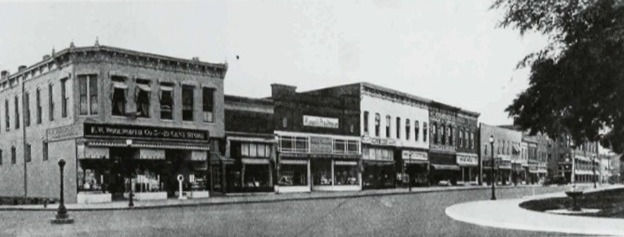
· During the Civil War, life in Marshall was fraught with difficulty. The diverse loyalties among residents made it nearly impossible to maintain neutrality. Many settlers in Saline County, with their southern heritage, naturally supported the South. However, some families were so torn by the conflict that they shuttered their businesses and temporarily relocated to safer areas. Marshall came under Union occupation after Confederate Col. Joseph Shelby’s Cavalry Brigade was routed during the Battle of Marshall in 1863. The Union troops remained until 1864, when they were deployed elsewhere. Following their departure, the courthouse where they had been garrisoned was set on fire and destroyed. The courthouse was rebuilt but also destroyed by accidental fire, finally being replaced by the current structure in 1882.
Post-Civil War Economic Development
● The arrival of the Missouri Pacific Railroad in the 1870's significantly boosted the town's economy, improving the transport of agricultural goods. The Alton-Chicago Railroad initially bypassed Marshall but added an industrial spur linked to town from the north. Marshall developed into a regional hub for grain, livestock and manufactured goods.
● Missouri Valley College, founded in 1889 in Marshall, Missouri, has a long-standing tradition of academic excellence. Its original building, Baity Hall, is proudly listed on the National Register of Historic Places, reflecting the institution’s rich history. Over the years, MVC has cultivated a diverse and inclusive educational environment, offering students a supportive community on its small-town campus. In recent years, the college has experienced record-breaking enrollment, surpassing all previous milestones.
Early 20th Century - Towards Modernization
● The town continued to grow with the rise of automobiles, electricity, and modern infrastructure.
● Agriculture remained dominant, but industries such as milling, canning, and manufacturing started to appear.
● Major employers during the early part of the century were The Missouri Colony, (later renamed the Marshall Habilitation Center or the Marshall State School) opening in 1901, the International Shoe factory opening in 1912, and in 1915 the F.M. Stamper Company (later named Banquet Foods and ConAgra Brands)
● The Great Depression hit the rural economy hard, but New Deal programs provided jobs and improved local facilities.
● During World War II, many residents served in the military, and local production supported the war effort.
Suburbanization and Economic Diversification
Post-war prosperity led to expansion in housing, education, and commerce.
There was increased investment in infrastructure, such as roads, schools, and healthcare.
Small manufacturing businesses and agri-businesses expanded, including meat processing, grain handling, and equipment repair.
1980s–2000s: Economic Shifts and Challenges
Like many small towns, Marshall faced challenges from farm crises, urban migration, and globalization.
Some manufacturing jobs declined, but the town retained a strong base in agriculture, especially corn, soybeans, and livestock.
Two major employers, the International Shoe factory and the Marshall State School, had closed but ConAgra and the Wilson’s Foods Hog Processing Plant
(later being operated by Cargill Meat) continued to provide steady employment.
The presence of Missouri Valley College helped support the local economy and cultural life as well as the newly built Fitzgibbon Hospital on the southwest edge of town.
Emphasis shifted toward education, healthcare, and service industries.
Events like the Marshall Philharmonic Orchestra concerts and Saline County Fair kept civic life vibrant.
2010s–Present: Revitalization and Community Development
Marshall has focused on downtown revitalization, historical preservation, and attracting small businesses and tourism.
Ongoing investment in the Missouri Valley College campus has provided economic and cultural benefits.
Emphasis on renewable energy, rural broadband, and economic resilience emerged in response to changing demographics and technology.
The Marshall Municipal Airport, updated city infrastructure, and the Marshall-Saline Development Corporation support continued economic planning.
Community events, education, healthcare, and small-scale entrepreneurship remain focal points for development.
Fun Facts & Cultural Notes
· Marshall, Missouri, is a town rich in history and culture. One of its most famous legends is Jim the Wonder Dog, a pointer dog from the 1930s known for his remarkable abilities. Jim's legend continues to be a source of local pride and attracts tourists to the area.
· The Nicholas-Beazley Aviation Museum showcases the world-renowned achievements of the Nicholas-Beazley Aircraft Company and Flying School, which were active during the 1920s and 1930s. This museum is a testament to Marshall's significant contributions to aviation history.
· Marshall is also the hometown of Jazz Musician Bob James, who is widely recognized for composing the theme song for the Taxi TV Series. His musical legacy adds to the town's cultural richness.
· The community in Marshall is vibrant and close-knit, with local festivals, high school sports, and strong support for the arts. These activities foster a sense of unity and pride among residents.
Websites:
City of Marshall: https://marshall-mo.com
Jim the Wonder Dog: https://www.jimthewonderdog.org
Marshall Tourism Commission: https://www.visitmarshallmo.com/
Nicholas-Beazley Aviation Museum: https://www.nicholasbeazley.org/


Comments